

Enclosed space vs confined space comes down to two questions: was the space built for workers to go in, and does it hold a serious hazard? An enclosed space, like a manhole or vault, is designed for periodic entry and has no hazardous atmosphere under normal conditions, so OSHA’s electric power rule allows a lighter entry procedure. A permit-required confined space has a real hazard, such as a bad atmosphere, engulfment or a shape that can trap a worker, and every entry follows OSHA’s full permit-space rule.
During a plant outage, most of what gets opened (boilers, HRSGs, condensers, tanks) belongs in the second group. Build the outage plan on that.
Enclosed space vs confined space: what’s the difference?
| Enclosed space | Permit-required confined space | |
|---|---|---|
| What it is | Tight way in and out, built for workers to enter from time to time, no hazardous atmosphere under normal conditions | Big enough to enter, tight way in and out, not built for people to stay in, and has a serious hazard |
| Typical examples at a plant | Manholes, underground vaults, tunnels and shafts built for routine access | Boilers, HRSGs, condenser waterboxes, flue gas ductwork and storage tanks opened during an outage |
| What the entry needs | Trained crew, cover checked, opening guarded, air tested (and ventilated if needed), an attendant where traffic is a hazard, rescue gear on hand | An entry permit, air testing, an attendant outside for the whole entry, an evaluated rescue team or service, and retrieval gear |
The deciding detail is a note under OSHA’s enclosed space definition. A space does not count as enclosed if it was never designed for workers to enter under normal operating conditions, or if it is expected to hold a hazardous atmosphere. Either one sends it to the permit-space rule.
And “hazardous” has a number on it. OSHA counts an atmosphere as hazardous when flammable gas passes 10 percent of its lower flammable limit, oxygen drops below 19.5 percent or climbs above 23.5, or a toxic substance goes over its exposure limit.
Why do outage entries usually land in the permit program?
Nobody walks into a firing boiler. It was not built for entry under normal operating conditions, so it fails the enclosed space test before anyone checks the air. Same for an HRSG opened for inspection, a condenser waterbox, flue gas ductwork and most storage tanks.
Then the outage piles on its own hazards:
- heat still radiating from casings opened right after a cool-down
- slag or ash that can break loose from tube walls
- stored energy in lines and equipment
- purge gases and cleaning chemicals left behind
- hot work inside the vessel during tube repairs
Each of these can make a space a permit space on its own. Plan boiler confined space entry and HRSG inspection work under the permit program from day one.
What does 1910.269 require for an enclosed space entry?
Even the lighter procedure for a true enclosed space, like a manhole or vault on the plant grounds, asks a lot:
- Entrants and attendants are trained on the hazards, the entry procedure and rescue.
- Before the cover comes off, someone checks for pressure, heat or a bad atmosphere (a hot cover is a warning sign) and loosens a fastened cover slowly.
- The opening gets a railing, a temporary cover or a barrier.
- The air is tested with a calibrated meter, oxygen first, then flammable gas.
- If the test finds flammables or low oxygen, forced air from a clean source runs before entry and until everyone is out.
- A first-aid trained attendant stays immediately available outside when traffic near the opening is a hazard.
- Rescue equipment is on hand.
- Before any open flame is used inside, someone tests for flammable gas, then again at least once an hour while it burns.
If hazards that could endanger an entrant or block escape remain after these steps, or the space holds a hazardous atmosphere, the entry has to meet the permit-space rule. An entry run under the permit program also satisfies the enclosed space rule, so one permit system can cover both.
Why do outages multiply the work?
An outage can open dozens of spaces on one shift. Each needs its own air testing, ventilation, attendant and rescue plan. One attendant can watch several spaces only if every duty can still be done for each of them.
Settle three things before the outage starts: every space classified with its hazards, the peak number of entries open at once on a shift, and the people and gear that number implies.
Contractor crews overlap, too. The host employer has to brief contractors on its permit spaces and coordinate entries when both crews work in or near the same spaces. Permit-to-work coordinators keep entry and hot work permits moving, and turnaround safety advisors run the hazard assessments, daily briefings and field audits across contractors.
What you need on site
- Every space being opened, classified as enclosed or permit-required, with its hazards
- Personal and area gas monitors that alarm for entrants and attendants the moment the air changes
- Explosion-proof blowers and duct to clear each space and keep fresh air moving
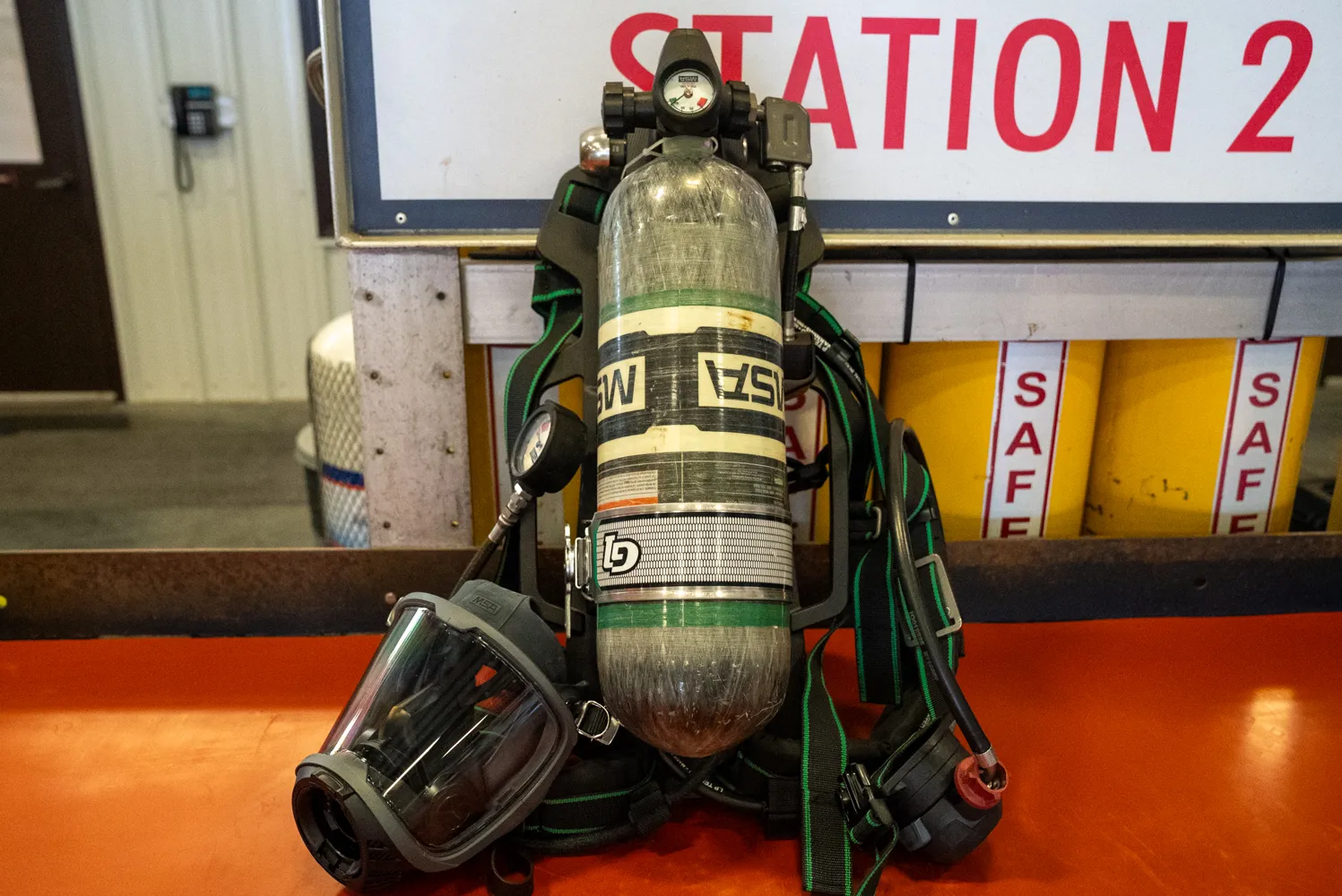
- Breathing air (SCBA, supplied air and escape units) for spaces ventilation can’t fix
- Entry permits, plus a hot work plan for repairs inside vessels
- An attendant at every opening in use
- A rescue team staged on site, with retrieval gear rigged before anyone goes in
Who has to be standing by for rescue?
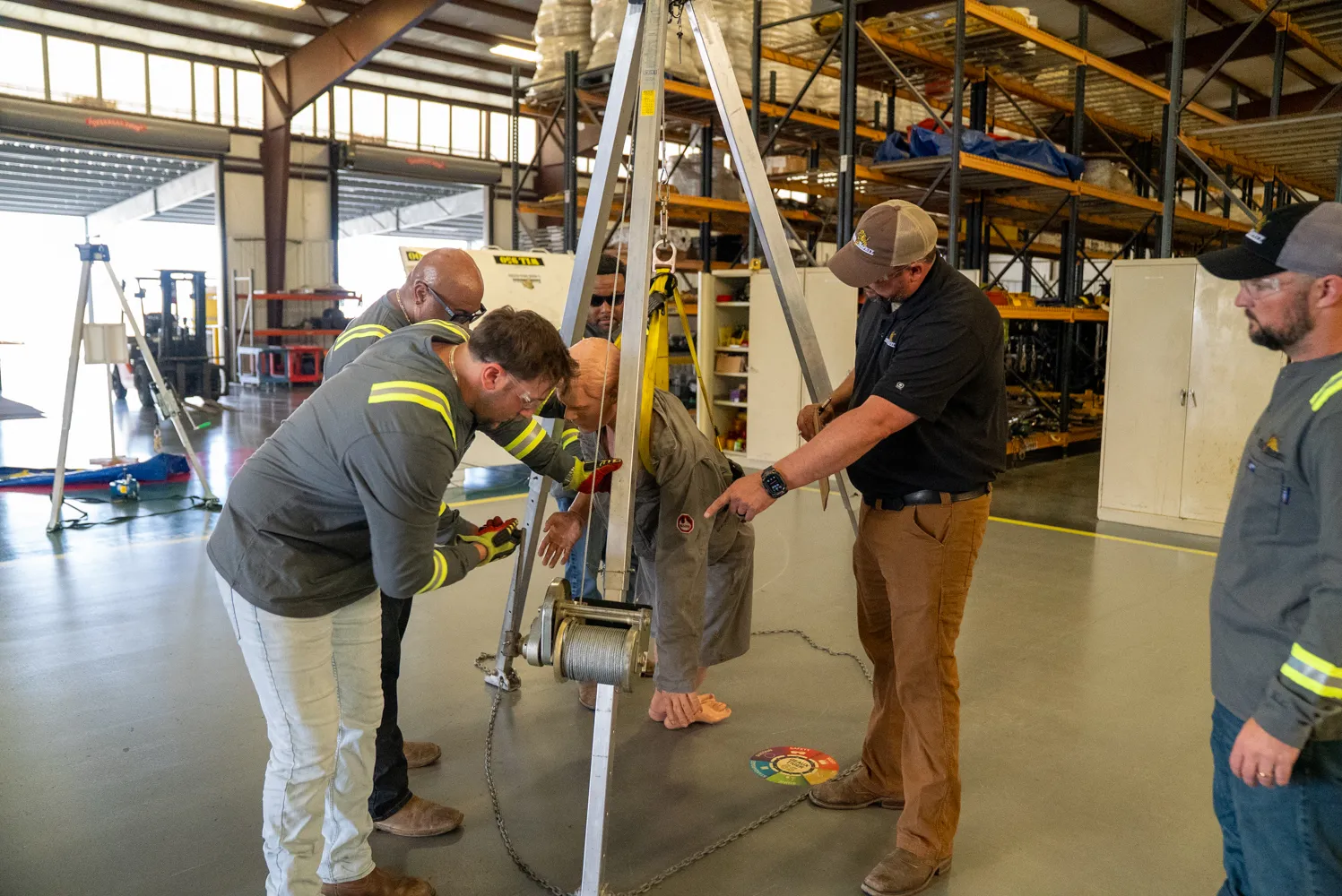
For a permit space, the employer has to evaluate its rescue team or service on two counts: can it get there in time for the hazards in that space, and is it skilled with the rescue tasks and gear those spaces call for. The team must know the hazards and get access to the spaces to plan and practice, and its members practice a permit-space rescue at least once a year.
Retrieval systems are required whenever someone goes in, unless they would make the entry more dangerous or would not help a rescue.
A confined space rescue team staged at the plant for the whole outage covers that without pulling plant staff off the schedule. Tiger provides standby rescue as a full team, or as equipment plus an attendant, with man-rated winches on tripods or davits, rescue stretchers that hoist through manways, and rope rescue kits.
Frequently asked questions
Is a boiler an enclosed space or a confined space?
Usually a permit-required confined space. A boiler is not designed for employee entry under normal operating conditions, so it falls outside the 1910.269 definition of an enclosed space and is evaluated under 1910.146, where residual heat, slag and atmospheric hazards normally make it a permit space.
Does 1910.269 replace 1910.146 at a power plant?
Only for routine entry into true enclosed spaces like manholes and vaults. If hazards that could endanger life or block escape remain after the 1910.269(e) and (t) precautions, or the space holds a hazardous atmosphere, the entry must meet 1910.146.
Can an enclosed space attendant do other work?
Yes, under 1910.269(e)(7), as long as the other duties don’t distract from watching the entrants and keeping the way in and out safe. A 1910.146 attendant stays outside for the full entry and covers more than one space only if every duty can still be done for each.
How often do you test for flammable gas during hot work in an enclosed space?
Immediately before the open flame is used and at least once an hour while it is in use, under 1910.269(e)(14), and more often if conditions in the space call for it.
What if the outage work counts as construction?
Then the construction confined space rule, 29 CFR 1926 Subpart AA, applies instead of 1910.146.
Planning an outage?
Tiger Safety Rentals stages entry gear per vessel and staffs outages with confined space and fire watch attendants, permit-to-work coordinators, turnaround safety advisors and standby rescue. See the full lineup on the power generation page, or call 888-365-5220 for 24/7 dispatch.
Sources
- OSHA 29 CFR 1910.269, electric power generation, transmission and distribution: what the rule covers, enclosed space entry, manholes and vaults, and its definitions of “enclosed space” and “hazardous atmosphere”
- OSHA 29 CFR 1910.146, permit-required confined spaces: definitions, host and contractor duties, attendants, and rescue and emergency services
- OSHA 29 CFR 1926 Subpart AA, confined spaces in construction
